
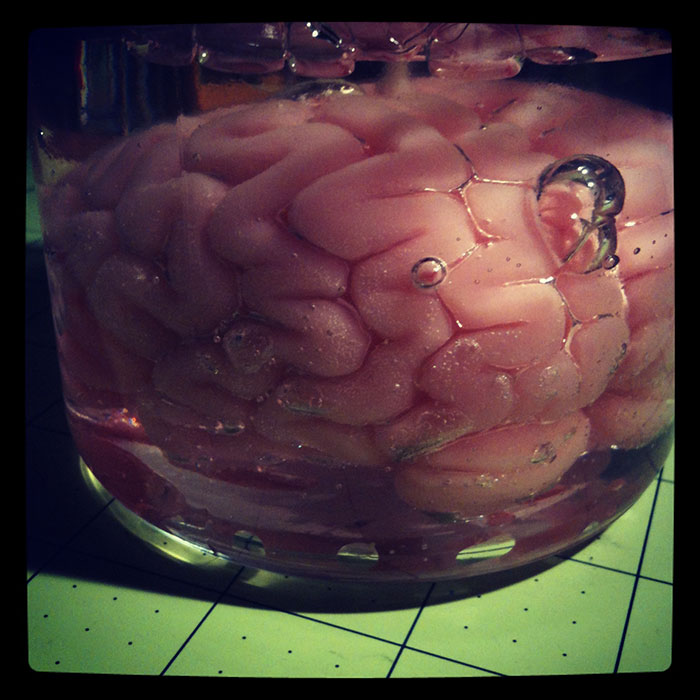
The Relationship Between Philosophy & Science Fiction
Introductory Thesis
For most of its long history; philosophy has had more than its share of dangerous people armed with dangerous ideas. On the strength of their supposedly subversive ideas:
Descartes, Spinoza, Hume and Rosseau to name but a few. The origins behind the “vat” are described by the American philosopher Hilary Putnam in his 1981 book:
Reason, Truth and History.
Putnam thought experiment is essentially an updated version of a 17th-century horror story–the evil demon (malign genie) conjured up by the French philosopher Rene Descartes in his 1641 essay;
Meditations on First Philosophy.
Descartes brilliant story would make for a fantastic modern Hollywood short film as it contains all the epic key points of a strange and compelling saga. An ongoing screenplay I have been working on for some time now with hopes of perhaps getting it publish for the art journal some time in the future. But as with most things these days: “slow moves”
Timeline:
A brief numerical timeline behind “vat” origins and further investigative research should these ideas proof to be over the radar for some of you who read the art journal. As the power of analytics suggest a large number of readers are of a voyeuristic nature who do read the publication but do not comment, follow or “like” these articles on a weekly manner.
- Plato’s cave (c-375bc)
- The mind body problem (c-1637ad)
- The veil of perception (1690)
- The experience machine (1974)
- Benjamin Levit & Neuroscience (1971)
- The Brain in a vat (1981)
Problems of Knowledge
Imagine that a human being has been subjected to an operation by an evil scientist. The person’s brain has been removed from the body and placed in a vat of nutrients which keeps the brain alive. The nerve endings have been connected to a super conductor particle accelerator work station computer. Casing the upright mammal to have the illusion that everything is perfectly normal. If we are to follow behind the neurological brain experiments behind the work of Benjamin Libet. In composing an oral argument behind the subjects experience is the result of electronic impulses behind an artificial brain and a computer simulator. We need to formulate several ideas using a layer cake of subversive mechanism culled from personal introspection and the language of observational philosophy. Using the above timeline as methods of research and further investigation as a way of formulating a sense of context for the reader who may wish to conjure its own conclusion as a means of conducting your own thought experiment.
A nightmare scenario, the stuff of science-fiction? perhaps, but of course that’s exactly what you would say if you were a brain in a vat! your brain may be in a vat rather than a skull, but every experience is exactly as it would have been if you were living as a real body in the world. The idea is quite simple: The world around you–your chair, the things emanating from the tongue, even those worldly possessions–are all part of the illusion. Thoughts and sensations fed into your disembodied brain by the “Agents” powering the powerful super computer. On these ideas we digress a bit to allow time to digest and bring in the words of Decartes:
“I shall suppose…that some malicious demon of the outmost power and cunning has employed all his energies in order to deceive me. I shall think that the sky, the air, the earth, colors, shapes, sounds and all external things are merely the delusions of dreams which he has devised to ensnare my judgment”
Descarte’s aim was to reconstruct the edifice of human knowledge on unshakable foundations for which he adopted his “Method of Doubt ” as a basic principle in philosophy. He discarded any beliefs susceptible to the slightest degree of uncertainty. After pointing out the unreliability of our senses and the confusion created by dreams. A subject Freud would pick up several hundred years after.
You probably don’t believe you are a brain in a vat. Most contemporary thinkers within the spectrum of neuroscience don’t believe they’re brains in vats. But you don’t have to believe it, you only have to admit you can’t be certain that you are not. The possibility appears to undermined our claims to knowledge about the external world. But within a contemporary field where ideas such as string theory may exist within a mathematical framework. Its worth referencing the brain in vat concept as an important elementary particle within the field of neuroscience and behavioral psychology.
Popular Culture
Modern Film & Technology Application
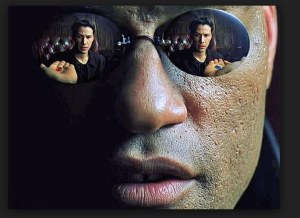
Ideas such as the brain in a vat have proved so thought-provoking and suggestive; that they have led to numerous popular incarnations. One of the most successful was the 1999 movie The Matrix (including its sequels). In which computer hacker Neo (played by Keanu Reeves) discovers that the world of 1999 is in fact a virtual simulation created by a malign cyber intelligence. As we described above in our “Problems to Knowledge” argument. The film presents a dramatic elaboration of the brain in vat scenario, all the main elements of which are reproduced. Thus showcasing the application of what may seem as abstract ideas put into practice for the endowment and pleasure of the masses.
Contemporary References
These “footnote links” are presented as guides and further material for the reader who might want to follow up with ideas covered in the essay.
- The Matrix Trilogies
- Morgans Freeman Through The Worm Whole
- What The Bleep Do We Know
- Benjamin Levit (Experiments in Neuroscience/Conciseness)
- Dr Qua-tom (Fred Allen Wolf)
The Simulation Argument:
As described within the fantastical world of the Matrix Films and recently during an episode of Morgans Freeman Through The Warm Whole. The computer simulation argument is one which has the potential to capture our imagination in relation to the “brain in a vat” theoretical argument. However, I would imagine the reader might be tempted to dismiss such theories as a form of nightmarish Sci-Fi rebuttal which is a reasonable ploy:
Through The Worm Whole: Are We A Simulation?
But as the prominent scientist from the Jet Propulsion lab in Pasadena CA suggest in the video, the idea behind the computer simulation argument is both in its infancy state while the data needed to proof such concepts might just be all around us. Furthermore, an ingenious argument recently devised by the philosopher Nick Bostrom suggest that is it highly probable that we are already living in a computer simulation!
just consider…
In the future it is likely that our civilization will reach a level of technology such that it can create incredibly sophisticated computer simulations such as “Sims”. Composed of human minds and of worlds for those minds to inhabit. The recently released motion picture “Her” by Spike Jones delves deeper into these ideas behind a “Siri” like OS with superb natural and human-like functioning. If upright mammals of the future are to bear witness to such technology, tiny resources will be needed. In an effort to sustain such simulated worlds within the confines of your mobile device or “Internet of Things” capable of displaying millions of simulated virtual experiences. Perhaps a “Google Glass“ human form apparatus might work as a form of human interface. And thus, a future where simulated minds will vastly outnumber biological ones could possibly takes place.
The experiences of both biological and simulated minds will be indistinguishable and both will of course think they are not simulated. But the latter (who will make up the vast majority of minds or OS ) will become a blur in motion. We naturally couch this argument in terms of its hypothetical claims about this “future” as postulated the documentary video. That such computer experiences as illustrated in Her, might actually exist within the living room experience of a near future.
How Long Before We Actually Get There?
Next Steps:
Buy The Book
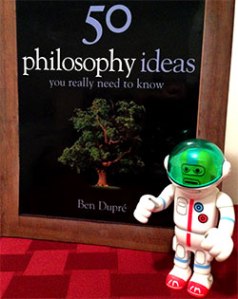 In a series of 50 accessible and lucidly written essays, Ben Dupre introduces and explains problems of knowledge, consciousness, identity, ethics, beliefs, justice, language, meaning and aesthetics. Ideas which began in ancient Greek covering contemporary applications within a reductionist framework for the observational thinker and DIY creative. If these ideas seem abstract, “crazy” or simply beyond the norm, I would suggest brushing on the links provided within the article as a way of introducing you to the concepts discussed.
#Art Journal Mag
https://twitter.com/ArtJournalMag/status/419553151180877825
A weekly depository of articles and DIY best practices covering an array of topics in art, design, technology and philosophy of culture. The aim of the magazine is to create a weekly syndication of essays with a focus on story telling with diverse narratives in subject matter.


 Arts Journal Zine
Leave a comment