

Institutional Taboo
Edited by Greg Wright,
Over a decade of experience as a copyeditor, proofreader, author and editor-in-chief. An avid outdoorsman, world traveler and military veteran with 10 years in the infantry, I can show anyone how to significantly increase their odds of survival anywhere from the office to the great outdoors.
Connect with Greg on:
A short essay on race, politics, culture and racial coded words within the vivarium of severe economic disparity that is the United States.
The history of race relations in America, while convoluted is also abstract. A conventional wisdom of American history has always based its foundation pertaining to any race narrative upon eradication of those at the bottom, in reality and in the collective consciousness, in favor of the status quo. With such tools as distraction by a ubiquitous entertainment industry, these insidious systems continue, today, by heavily favoring certain experiences and representations over others. This, in turn, collectively manipulates the social consciousness with regard to how races, cultures and ideas are viewed in historical and contemporary settings.
In the past, wealthy landowners used slavery as a form of self-enrichment through a plantation system in conjunction with strategic real world abuses meant to divide the nation’s poorest along racial lines.
Today, we merely read a brief, antiseptic synopsis, which historians recored for us to read aloud in half-awake classrooms.
( Go read Howard Zinn)
Immediately following the Civil War, the Reconstruction Era was an unprecedented and chaotic period in American history. In 1866, radical Republicans successfully pushed through policies that saw former- Confederate political leaders stripped of their power and sweeping rights given to the Freemen (former-slaves). This was all done despite then President Andrew Johnson’s complete opposition to Reconstruction, which so frustrated the Congress that an effort to successfully impeach him fell short by only one vote of a needed 2/3’s majority. The unabated resistance to the transformation of America from institutionally racist slave state to equal society was a major factor in causing the Panic of 1873, which saw the total collapse of the U.S and European economies. This ironically led to a voter blowback that saw Republicans summarily voted of office and the unceremonious end of any push to abolish racist tactics for nearly 100 years.
Reconstruction was seen at the time as the only reliable equal playing field for the freed slaves. Allowing for a proper entitlement of land, education and a needed social economic social safety net. With a fail reconstruction period leading to Jim Crowe segregation regime and KKK terrorist attacks in the south. The conditions where ripe for an unequal balancing act between the races.
Fast forward to the Civil Rights Movement of the 1960’s that was the next great push to eliminate the segregation regime of Jim Crowe and endeavor to fulfill the promise of these certain unalienable rights for all Americans.
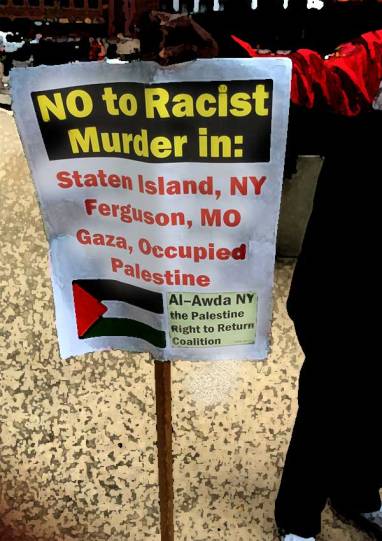
The shooting, then, of Michael Brown by a local Missouri police officer must be viewed in light of the historical progression and adaptation of institutionalized racism as it has existed and continues to exist, today. By describing the rise of the militarized police industry and observational “mise en scene” using the transit network as an appropriation of military tactics. Thus, systematically used against certain demographics of the citizenry, the following frameworks holds true:
“There’s a reason you separate military and the police. One fights the enemies of the state, the other serves and protects the people. When the military become both, then the enemies of the state tend to become the people”
–WIlliam Adama
“This is Jim Crow country”, says Garrrett Duncan, a souther professor of education and African-American studies at Washington University in St . Louis. “You still have a predominantly white and affluent population voting for who runs North Country.” the collection of townships like Ferguson north of St. Louis”.
–Alex Altmen reporting on Ferguson, for Time Magazine

We are inclined to ask what are the social and political realities on the ground that end with disproportionate number of young African-American males as targets of police “use of force?’ By plotting an unbroken timeline, we can begin to see the true nature of race relations in the history of the United States and how they pertain to us today. Beginning with a failure of the Reconstruction Era followed by decades of civil and economic subjugation of African-Americans an adaptation of a racist system from slave state to segregation regime-for the benefit of political connected elites at the top.
Evidence may be found in segregation, the fail efforts behind reconstruction, Dr.King assassination, Wako Texas, Rodney King, Amadou Diallo, Trayvon Martin, Eric Garner and now Michael Brown. With Wako, being a noted example behind the rise of tactical enforcement policies against its citizens.
Once, again, during the Civil Rights Movement, the institutions of racism adapted to changing circumstances by dismantling Jim Crowe and reforming it as a “War on Drugs” in the 1970’s. We begin to see a pattern emerge, not of a brave new era of racial equality, but of a highly adaptable system of institutional racism that continues to this day.
We are left with a system which has tentatively restored or granted certain freedoms while continuing to foster other more insidious forms of institutional racism, such as those that led to the shooting of Michael Brown in Ferguson. The introduction of ideas, such as “the hood” following “white flight” from urban areas led to a systemic inequality and drug infestation that pervades African-American communities. Additionally, the inescapable revolving door prison system sees African-American males comprise nearly half of all those incarcerated in the United States.
One wishes the media conglomerates would have taken this time following the tragic death of a young man to ask why it is that our institutions still so utterly and completely subjugate African-Americans? Rather, instead, we’re spoon fed images of a handful of looters, which the 24 hour news cycle sensationalized beyond any sense of reality.
The sheer aggressiveness exhibited by the National Guard and the police use of tear gas, armored trucks, automatic weapons and snipers against peaceful demonstrators in Ferguson paints a haunting portrait of a dislocated reality in which the treatment of some citizens contrasts disturbingly with other more privileged high end markets. What is the end-result when we treat some folks as second-class citizens who should dare not speak out while those at the top have a direct line to the White House for their any petty grievance?
Furthermore, Radley Balko candidly informs us in his seminal book: “Rise of the Warrior Cop” of the heavy militarization of today’s police force, which was plainly seen on national TV during the peaceful demonstrations in Ferguson. Is it really difficult to tell the difference between a handful of looters and peaceful folks with protest signs?
“In the United States, we’ve always drawn a firm line between the military and the police. There’s good reason for that. These are two very different jobs.
The role of the police officers is to protect our rights and keep the peace, while the military’s job is to annihilate foreign enemies. For the most part
we’ve done a good job of keeping the military and the police separate. Nevertheless, as I argue in my book, we’ve violated the spirit of the Posse Comitatus Act, a Civil War-era law prohibiting police from enlisting active-duty soldiers for civilian law enforcement. Instead of bringing soldiers in we’ve encourage police officers to use the tactics and adopt the mindset of soldiers. The outcome has been just as troubling”.
–Radley Balko,
Layered within the police state is the consistently heavy-handed use of force against the African-American community, which has become ubiquitous in the lives of less wealthy through shooting of pets, tactics of intimidation and menacing of peaceful citizens throughout their daily lives. This, in conjunction with arbitrary prison sentences, expanded criminalization of human behavior by legislation, staggering incarceration rates for nonviolent offenses and a never-ending cycle of revolving door probation and social “services” institutions leads to a State which increasingly observes and reports on every aspect of the lives of lower income Americans.
“The Ferguson, Mo police officer who fatally shot an unarmed African American teenager two weeks ago, setting off protest and riots was bounded by 12 pages of police department regulations, know as General Order 410.00, that govern officers use of deadly force. Whether he obeyed them will play a central role in deliberations by a St. Louis County grand jury over whether the officer, Darren Wilson should be charged with a crime in the shooting”.
— Michael Wines & Frances Robles, reporting for NY Times
One must wonder whether it has become glaringly apparent that a federal regulatory body must be created in order to independently conduct these investigations. Such solutions, while woefully moderate, may offer badly needed accountability instead of the shamefully inept investigations in which the local department typically investigates itself by rubber stamping the officer’s actions as above reproach.
The status quo, as it is, now, is an abuse of power that should concern every citizen. Instead of fostering a freer society in which all are treated based on the content of their character, we have seen an increasingly militarized and provocative police state with free rein to violate our civil rights in the name of preventing terrorism or reducing crime or keeping our kids off drugs. Fear tactics have clouded the waters of liberty.
To illustrate the polluted mindset that has overtaken some protectors of liberty, in a recent conversation with someone in law enforcement, this gentlemen kindly pointed the following explanation to me regarding the recent shooting of Michael Brown:
“There is no nice way to arrest a potentially dangerous, combative suspect. The police are our bodyguards, or hired fists, batons and guns. We pay them to do the dirty work of protecting us, the work we’re too afraid, too unskilled or too civilized to do ourselves. We expect them to keep the bad guys out of our business, cars and houses, out of our face. We want them to take care of the problem. We just don’t want see how [sic] its done”.
—Charles H Webb
I could not agree more with Mr. Webb on the matter of arresting a combative suspect. We rely on the police force to protect us from harm. However, there is a difference between the discerning of a potential threat and the abuse of power by deadly force as we have seen in a myriad instances, such as that of Michael Brown. I would hope officers who take an oath to protect the citizenry would know the difference between a malicious or aggressive perpetrator and a terrified human being who raises their hands up in the air.
I know the line blurs immensely in the moment when everything is happening so fast. Yet, the glaring disparity between the police response in certain low-income or predominantly African-American communities and that response in high-income, predominantly Caucasian areas is an ever-present reality in the contemporary policing of America.
One question we need to ask ourselves is in what ways can we ensure that we police our streets and keep all citizens free from harm, while we also finally eradicate the shameful specter of racism from the annals of our contemporary American experience. Until we can finally have an honest and open discussion about institutional racism, though, history has shown us that we can never hope to truly eradicate it.
The Michael Brown shooting is a cultural “avatar” which can no longer go unprocessed in our ever-connected end of irony epoch. The manner in which big media have covered the event can only leave those who hope to honestly discuss the matter within a tear gas of confusion. One hopes the truth behind the shooting is finally exposed for all to see in a clear and transparent manner. While the federal investigation will take months to unravel, the truth is indeed out there somewhere.
Resources | Further Reading
- The Rise Of The Warrior Cop: The last days of colonialism taught America’s revolutionaries that soldiers in the streets bring conflict and tyranny. As a result, our country has generally worked to keep the military out of law enforcement.
- Time Magazine: Ferguson Wrestles with what to do next.
- Lecture Talk From Cato Institute: Cato’s letter on the rise of the militarization of our police forces in America. Fall 2013
- The Reconstruction Era: In the history of the United States, the term Reconstruction Era has two senses: the first covers the complete history of the entire country from 1865 to 1877 following the Civil War; the second sense focuses on the transformation of the Southern United States from 1863 to 1877, as directed by Congress, with the reconstruction of state and society.
Next Steps

Art journal is a bi-weekly publication focusing on the culture of creative ideas. We will never compromise our values which are grounded in visual cues aimed at delivering the best essay critique on the web. Subscribe to our grassroots newsletter today.
 Arts Journal Zine
Leave a comment