Conceptualism ( or Conceptual Art-Wiki ) is a movement in art history, asserting ideas over visual emphasis in a work of art. An often misunderstood labeling imposed by the non-art public on these works of art as “abstract in nature” calls for a closer investigation. Into a deeper understudying behind the meaning and understanding of Conceptual art. Conceptual artist asserted that their artworks were essentially hypothesis rather than objects. The art objects presented by conceptualist were assessed in terms of how successfully they communicated ideas rather than any aesthetic considerations. Giving rise to the notion of negating the corporeal in art within a visual & historic framework. Many contemporary artist today who preferred a more traditional approach in art making. Encounter difficulties when understanding works of conceptual and minimal practice in a gallery space. The word “bullshit” has even been used to describe works of Conceptual art by those who fail to see its philosophical and contextual elements.
In 1966, Serra made his first sculptures out of nontraditional materials such as fiberglass and rubber. Serra’s earliest work was abstract and process-based made from molten lead hurled in large splashes against the wall of a studio or exhibition space. In 1967 and 1968 he compiled a list of infinitives that served as catalysts for subsequent work: “to hurl” suggested the hurling of molten lead into crevices between wall and floor; “to roll” led to the rolling of the material into dense, metal logs
Our negation of the corporeal thesis contains two notable benchmarks. An incorrect labeling by the non art public in their use of the term “Abstract” to describe Conceptual art. Abstract art contains a rigorous visual system we can easily pin point. Go take a look at a MondrianorHoffman and tell me if you don’t see a clear compositional structure there. An abstract work of art is actually govern by certain traditional conventions. Line, shape, texture, color theory and composition. Conceptual art, as we shall explore is a complete negation of these visual principles in art. Instead we are presented with ideas, concepts and the viewer better be prepared to engaged in intellectual discourse. As a means of interacting with the work of art, otherwise mis-connections are bound to happen.
“It isn’t necessary for a work to have a lot of things to look at, to compare, to analyze one by one, to contemplate.
The thing as a whole, its quality as a whole, is what is interesting. Shape-image, color and surface are single and
neutral or moderate areas or parts, any connections or transitional areas”
Judd developed a visual language that conformed to these ideas behind negating the corporeal in art. He created structures to be appreciated as objects in themselves, without connections to anything else. All Conceptualist and Minimalist work lack of mimetic, symbolic or expressive function led to the label “Minimalist or Conceptualist” by critics of the movement. A clear rejection from traditional contemporary artist whose works rely on purely visual and expressive methods for conveying art forms is a notable benchmark to understand. As a visual artist myself, my work contains the latter more traditional approaches in picture making. While having a deep understanding and appreciation for a period in art which focus was centered around ideas practice between academia and philosophical discourse. The notion of a work being a process rather than a complete whole, is another distinction to grasp in Conceptual art.
What is the underlying process behind conceptual art making?
its ideas and materials are elementary particles to consider when viewing these works in a museum, gallery space@DIA-ArtCenter or in nature.
The material form behind much of the works created on paper, canvas, walls and in nature where completely new in art at the time. This newness introduced by the artist in their radical departure from traditional oil, paint, charcoal, easel materials allowed their “process based art’ to flourish beyond the gallery space. Instead, these artist created pieces using lead, industrial materials, steel, acrylic, yarn, plexiglass, found objects, performance video, fluorescent tubing to formulated their mathematical thesis onto a physical space. What became a complete denial of the corporeal timeline in art history. Catapulted into a movement which merged several different philosophical taxonomies from a single idea on paper, into reality.
In able to truly understand Conceptual art, a voyage up to DIAin Beacon NY is a must this Summer. There the viewer can formulate their own views whether Conceptual art practice is “BS” or not. Does Conceptual art conforms or distorts our values in what is considered art by the masses? How does the notion of art in the public sphere translates the meaning of it’s existence?
Viewing the visual artist a cultural theorist within a Conceptualist framework is a notable first step.
The Artist
As A Cultural Theorist
Artist such as Frank Stella, Richard Serra, Gordon Matta Clarke, Eva Hesse, Jasper Johns, John Baldersari, Christo, Donald Judd, Carl Andre, Joseph Beuys, Joseph Kosuth and Sol Lewitt. Explored process in their adaptations of both Minimalism and Conceptual art practice. Between the late 1960’s to late 70’s these visual transformations were known as Process Art and also described by the gallery market as Post-Minimalist.
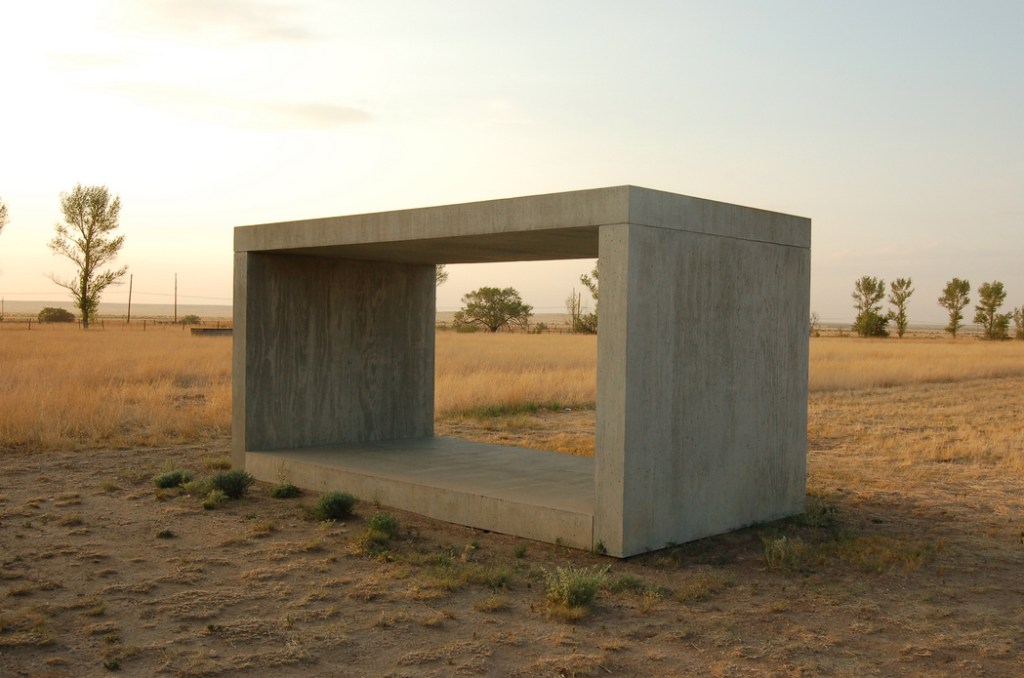
Donal Judd presented a series of monochrome metal boxes that had been prefabricated in a factory for a perfect finish and to avoid individualities of shape or texture. Judd attached these units to the walls at equal intervals, forming what were called “stacks”. He labelled his installations as specific “art objects” as he did not want to classify them in terms of painting or sculpture. This negation of referencing traditional tools found within the history of art is central to our negation in art thesis as seen in Conceptualist frameworks. Judd’s cubes enabled complex encounters for viewers, whose reflections would move on the mirrored surface as they walked around these works of art. As the 1960’s art experiment came into a dramatic end, Minimalist artist merged into one cohesive group. Embracing a Conceptualist framework fill with infinite ideas, philosophy and new materials to experiment.
This dematerialization of the art object posed challenging questions for both public and private galleries at the time. For example, if the material work was no longer the prime piece, then how could art be sold, collected and valued? Could the old hierarchy of critics, curators and white space galleries be circumvented? Within a technologist point of view, I see a clear disruption where DIY publishing is a clear alternative for all artist working today. WP.com, SquareSpace, Dribble, CTTDC, Medium, Patrion, Indie-GoGO, Pinterest are modern and tech driven alternatives to the traditional art gallery model.
Creating alternative online spaces to share ideas in visual art would have been a major advantage for the first Conceptualist artist movement of the late 1960’s.
The French conceptualist Daniel Buren exhibited vertical stripes outside gallery spaces, on walls, floors and even on sandwich boards attached to people, explaining:
“The museum/gallery instantly promotes to “art” status whatever it exhibits with conviction, i.e., habit
thus diverting in advance any attempt to question the foundations of art”
Daniel Buren clear negation of the art establishment of his time represents a turning point in how we view and collect contemporary art today. The idea of creating our own independent publishing models online, beyond a white gallery cube using programing models is within reach today. Within such democratic filter were anything or any one can publish, a sense of digital curation must emerge as a major social platform. Perhaps a new form of creative CMS just for artist is the right tool in the 21st Century. One that is open, adaptable with revenue built in API tools for collaboration and distribution.
Sol Lewitt wrote instructions for wall drawings to be completed by assistants. These analog algorithms which comprised text, a diagram and a certificate signed by the artist, assumed as much significant as the actual drawings exhibited. Sol argued that,
Thus showcasing the ability and identity of the maker was less important than the concept behind the artwork itself. Conceptual and Minimalist artist where clearly influenced by both DaDa and the Neo-Dadaist art practice at Black Mountain College during the late 1950’s. Two notable leading examples are found in the works of both Jasper Johnand Robert Rauschenberg Including the influential “happenings” behind Allan Kaprowart experiments.
With the invention of cubism by Pablo Picasso during the second decade of the 20th Century, visual collage was the next logical step. Duchamp took a radical leap forward to claim the idea of the “found object” as in the Urinal piece to say any object is now a work of art, as declared by the artist. Picasso took a more traditional stance when presenting his found object college sculptures as works of art because the artist created something using banal materials. We can draw a clear distinction between conceptualist practice as the Duchamp school vs the traditional visual framework of Picasso & Matisse.
Conceptual art practice carries with it a high level of sophistication and appropriation tactics within its intellectual discourse as a central component. The negation to incorporate tradition with a visual framework where line, shape, color, texture, paint and traditional art materials are used to rendered a visual form. Evoking a deeper intellectual conversation as a work of art seen as a literal interpretation. Between intellectual ideas in science and philosophy, mixed in with literary sources.
Solomon “Sol” LeWitt (September 9, 1928 – April 8, 2007) was an American artist linked to various movements, including Conceptual art and Minimalism.
Typographic work emerged as a new medium in the late 1960’s into the 70’s era. Produced by artist such as Jospeph Kosuth, John Baldersari and later on during the mid 80’s by Barbara Kruger. Exploring the relationship between linguistics and intellectual discourse. How words could represent ideas within the lexicon that is visual art as a mirror behind communication tactics. Conceptualism re-emerges during the mid 90’s in the form of “installation art” where the notion of transforming the gallery space into a archeological space of emotions, became a central character during the 90’s art period.
Conceptual Art
Galleries
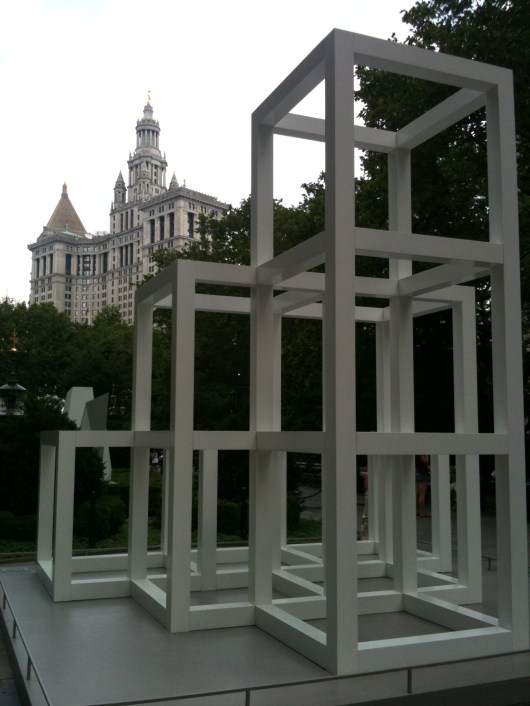
Sol Lewitt
Notes On Conceptual Art- Installation Wall Drawing
Notes On Conceptual Art- Installation Wall Drawing
Notes On Conceptual Art- Installation Wall Drawing
Notes On Conceptual Art- Installation Wall Drawing
Notes On Conceptual Art- Installation Wall Drawing
Notes On Conceptual Art- Installation Wall Drawing
Richard Serra
Notes On Conceptual Art-Richard Serra steel works are a monumental feat to the eye.
Notes On Conceptual Art-Richard Serra steel works are a monumental feat to the eye.
Notes On Conceptual Art-Richard Serra steel works are a monumental feat to the eye.
Notes On Conceptual Art-Richard Serra steel works are a monumental feat to the eye.
Notes On Conceptual Art-Richard Serra steel works are a monumental feat to the eye.
Notes On Conceptual Art-Richard Serra steel works are a monumental feat to the eye.
Notes On Conceptual Art-Richard Serra steel works are a monumental feat to the eye.
Notes On Conceptual Art-Richard Serra steel works are a monumental feat to the eye.
John Balderssari “DOTS”
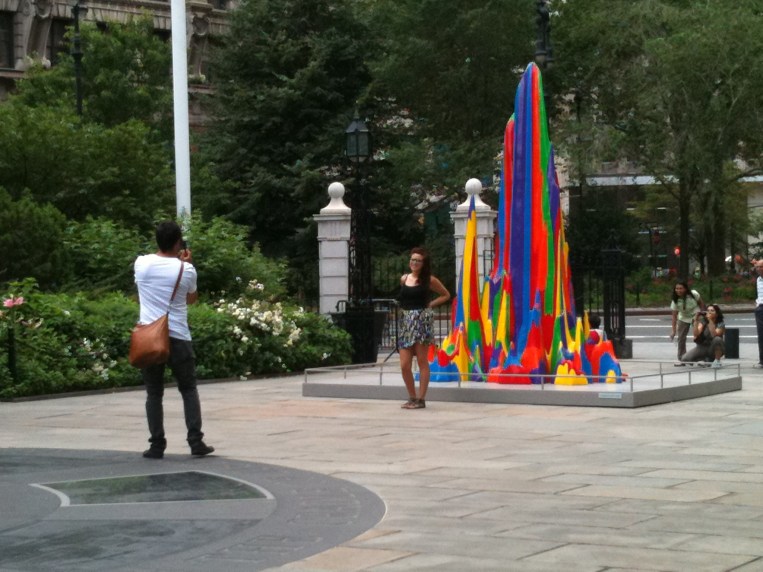
Notes On Conceptual Art- JB used the “Dot” element as the ultimate “FUCK YOU” node to his gallery observers.
Notes On Conceptual Art- JB used the “Dot” element as the ultimate “FUCK YOU” node to his gallery observers.
Notes On Conceptual Art- JB used the “Dot” element as the ultimate “FUCK YOU” node to his gallery observers.
Notes On Conceptual Art- JB used the “Dot” element as the ultimate “FUCK YOU” node to his gallery observers.
Notes On Conceptual Art- JB used the “Dot” element as the ultimate “FUCK YOU” node to his gallery observers.
Notes On Conceptual Art- JB used the “Dot” element as the ultimate “FUCK YOU” node to his gallery observers.
Notes On Conceptual Art- JB used the “Dot” element as the ultimate “FUCK YOU” node to his gallery observers.
Notes On Conceptual Art- JB used the “Dot” element as the ultimate “FUCK YOU” node to his gallery observers.
Jasper Johns
Notes On Conceptual Art- Jasper paintings and sculptures was a clear departure from abstraction during the late 50’s. Into a brand new conceptual framework behind ideas and context
Notes On Conceptual Art- Jasper paintings and sculptures was a clear departure from abstraction during the late 50’s. Into a brand new conceptual framework behind ideas and context
Notes On Conceptual Art- Jasper paintings and sculptures was a clear departure from abstraction during the late 50’s. Into a brand new conceptual framework behind ideas and context
Notes On Conceptual Art- Jasper paintings and sculptures was a clear departure from abstraction during the late 50’s. Into a brand new conceptual framework behind ideas and context
Notes On Conceptual Art- Jasper paintings and sculptures was a clear departure from abstraction during the late 50’s. Into a brand new conceptual framework behind ideas and context
Gordon Matta Clark
In the early 1970s as part of “the Anarchitecture group”, Matta-Clark was interested in the idea of entropy, metamorphic gaps, and leftover/ambiguous space. Fake Estates was a project engaged with the issue of land ownership and the myth of the American dream – that everyone could become “landed gentry” by owning property. Matta-Clark “buys” into this dream by purchasing 15 leftover and unwanted properties in Manhattan for $25–$75 a plot.
Notes On Conceptual Art- In the early 1970s as part of “the Anarchitecture group”, Matta-Clark was interested in the idea of entropy, metamorphic gaps, and leftover/ambiguous space. Fake Estates was a project engaged with the issue of land ownership and the myth of the American dream – that everyone could become “landed gentry” by owning property. Matta-Clark “buys” into this dream by purchasing 15 leftover and unwanted properties in Manhattan for $25–$75 a plot.
Notes On Conceptual Art- In the early 1970s as part of “the Anarchitecture group”, Matta-Clark was interested in the idea of entropy, metamorphic gaps, and leftover/ambiguous space. Fake Estates was a project engaged with the issue of land ownership and the myth of the American dream – that everyone could become “landed gentry” by owning property. Matta-Clark “buys” into this dream by purchasing 15 leftover and unwanted properties in Manhattan for $25–$75 a plot.
Notes On Conceptual Art- In the early 1970s as part of “the Anarchitecture group”, Matta-Clark was interested in the idea of entropy, metamorphic gaps, and leftover/ambiguous space. Fake Estates was a project engaged with the issue of land ownership and the myth of the American dream – that everyone could become “landed gentry” by owning property. Matta-Clark “buys” into this dream by purchasing 15 leftover and unwanted properties in Manhattan for $25–$75 a plot.
Notes On Conceptual Art- In the early 1970s as part of “the Anarchitecture group”, Matta-Clark was interested in the idea of entropy, metamorphic gaps, and leftover/ambiguous space. Fake Estates was a project engaged with the issue of land ownership and the myth of the American dream – that everyone could become “landed gentry” by owning property. Matta-Clark “buys” into this dream by purchasing 15 leftover and unwanted properties in Manhattan for $25–$75 a plot.
Notes On Conceptual Art- In the early 1970s as part of “the Anarchitecture group”, Matta-Clark was interested in the idea of entropy, metamorphic gaps, and leftover/ambiguous space. Fake Estates was a project engaged with the issue of land ownership and the myth of the American dream – that everyone could become “landed gentry” by owning property. Matta-Clark “buys” into this dream by purchasing 15 leftover and unwanted properties in Manhattan for $25–$75 a plot.
Notes On Conceptual Art- In the early 1970s as part of “the Anarchitecture group”, Matta-Clark was interested in the idea of entropy, metamorphic gaps, and leftover/ambiguous space. Fake Estates was a project engaged with the issue of land ownership and the myth of the American dream – that everyone could become “landed gentry” by owning property. Matta-Clark “buys” into this dream by purchasing 15 leftover and unwanted properties in Manhattan for $25–$75 a plot.
Frank Stella
Notes On Conceptual Art Upon moving to New York City, he reacted against the expressive use of paint by most painters of the abstract expressionist movement, instead finding himself drawn towards the “flatter” surfaces of Barnett Newman’s work and the “target” paintings of Jasper Johns. He began to produce works which emphasized the picture-as-object, rather than the picture as a representation of something, be it something in the physical world, or something in the artist’s emotional world. Stella married Barbara Rose, later a well-known art critic, in 1961. Around this time he said that a picture was “a flat surface with paint on it – nothing more”. This was a departure from the technique of creating a painting by first making a sketch. Many of the works are created by simply using the path of the brush stroke, very often using common house paint.
Notes On Conceptual Art Upon moving to New York City, he reacted against the expressive use of paint by most painters of the abstract expressionist movement, instead finding himself drawn towards the “flatter” surfaces of Barnett Newman’s work and the “target” paintings of Jasper Johns. He began to produce works which emphasized the picture-as-object, rather than the picture as a representation of something, be it something in the physical world, or something in the artist’s emotional world. Stella married Barbara Rose, later a well-known art critic, in 1961. Around this time he said that a picture was “a flat surface with paint on it – nothing more”. This was a departure from the technique of creating a painting by first making a sketch. Many of the works are created by simply using the path of the brush stroke, very often using common house paint.
Notes On Conceptual Art Upon moving to New York City, he reacted against the expressive use of paint by most painters of the abstract expressionist movement, instead finding himself drawn towards the “flatter” surfaces of Barnett Newman’s work and the “target” paintings of Jasper Johns. He began to produce works which emphasized the picture-as-object, rather than the picture as a representation of something, be it something in the physical world, or something in the artist’s emotional world. Stella married Barbara Rose, later a well-known art critic, in 1961. Around this time he said that a picture was “a flat surface with paint on it – nothing more”. This was a departure from the technique of creating a painting by first making a sketch. Many of the works are created by simply using the path of the brush stroke, very often using common house paint.
Notes On Conceptual Art Upon moving to New York City, he reacted against the expressive use of paint by most painters of the abstract expressionist movement, instead finding himself drawn towards the “flatter” surfaces of Barnett Newman’s work and the “target” paintings of Jasper Johns. He began to produce works which emphasized the picture-as-object, rather than the picture as a representation of something, be it something in the physical world, or something in the artist’s emotional world. Stella married Barbara Rose, later a well-known art critic, in 1961. Around this time he said that a picture was “a flat surface with paint on it – nothing more”. This was a departure from the technique of creating a painting by first making a sketch. Many of the works are created by simply using the path of the brush stroke, very often using common house paint.
Notes On Conceptual Art Upon moving to New York City, he reacted against the expressive use of paint by most painters of the abstract expressionist movement, instead finding himself drawn towards the “flatter” surfaces of Barnett Newman’s work and the “target” paintings of Jasper Johns. He began to produce works which emphasized the picture-as-object, rather than the picture as a representation of something, be it something in the physical world, or something in the artist’s emotional world. Stella married Barbara Rose, later a well-known art critic, in 1961. Around this time he said that a picture was “a flat surface with paint on it – nothing more”. This was a departure from the technique of creating a painting by first making a sketch. Many of the works are created by simply using the path of the brush stroke, very often using common house paint.
Notes On Conceptual Art Upon moving to New York City, he reacted against the expressive use of paint by most painters of the abstract expressionist movement, instead finding himself drawn towards the “flatter” surfaces of Barnett Newman’s work and the “target” paintings of Jasper Johns. He began to produce works which emphasized the picture-as-object, rather than the picture as a representation of something, be it something in the physical world, or something in the artist’s emotional world. Stella married Barbara Rose, later a well-known art critic, in 1961. Around this time he said that a picture was “a flat surface with paint on it – nothing more”. This was a departure from the technique of creating a painting by first making a sketch. Many of the works are created by simply using the path of the brush stroke, very often using common house paint.
Notes On Conceptual Art Upon moving to New York City, he reacted against the expressive use of paint by most painters of the abstract expressionist movement, instead finding himself drawn towards the “flatter” surfaces of Barnett Newman’s work and the “target” paintings of Jasper Johns. He began to produce works which emphasized the picture-as-object, rather than the picture as a representation of something, be it something in the physical world, or something in the artist’s emotional world. Stella married Barbara Rose, later a well-known art critic, in 1961. Around this time he said that a picture was “a flat surface with paint on it – nothing more”. This was a departure from the technique of creating a painting by first making a sketch. Many of the works are created by simply using the path of the brush stroke, very often using common house paint.
Eva Hesse
Notes On Conceptual Art- Hesse graduated from New York’s School of Industrial Art at the age of 16, and in 1952 she enrolled in the Pratt Institute of Design. She dropped out only a year later.[9] Then, from 1954-1957 she studied at Cooper Union and in 1959 she received her BA from Yale University.[9] While at Yale, Eva studied under Josef Albers and was heavily influenced by Abstract Expressionism After Yale, Eva returned to New York, where she became friends with many other young minimalist artists, including Sol LeWitt, Donald Judd, and others. Her close friendship with Sol LeWitt remained until the end of her life. The two frequently wrote to one another, and in 1965 Sol famously counsels a young doubting Eva to “Stop [thinking] and just DO!” Sol and Eva went on to become two of the most influential artists of the 1960s, and their friendship aided in the artistic development of each of their works
Hesse graduated from New York’s School of Industrial Art at the age of 16, and in 1952 she enrolled in the Pratt Institute of Design. She dropped out only a year later.[9] Then, from 1954-1957 she studied at Cooper Union and in 1959 she received her BA from Yale University.[9] While at Yale, Eva studied under Josef Albers and was heavily influenced by Abstract Expressionism After Yale, Eva returned to New York, where she became friends with many other young minimalist artists, including Sol LeWitt, Donald Judd, and others. Her close friendship with Sol LeWitt remained until the end of her life. The two frequently wrote to one another, and in 1965 Sol famously counsels a young doubting Eva to “Stop [thinking] and just DO!” Sol and Eva went on to become two of the most influential artists of the 1960s, and their friendship aided in the artistic development of each of their works
Hesse graduated from New York’s School of Industrial Art at the age of 16, and in 1952 she enrolled in the Pratt Institute of Design. She dropped out only a year later.[9] Then, from 1954-1957 she studied at Cooper Union and in 1959 she received her BA from Yale University.[9] While at Yale, Eva studied under Josef Albers and was heavily influenced by Abstract Expressionism After Yale, Eva returned to New York, where she became friends with many other young minimalist artists, including Sol LeWitt, Donald Judd, and others. Her close friendship with Sol LeWitt remained until the end of her life. The two frequently wrote to one another, and in 1965 Sol famously counsels a young doubting Eva to “Stop [thinking] and just DO!” Sol and Eva went on to become two of the most influential artists of the 1960s, and their friendship aided in the artistic development of each of their works
Hesse graduated from New York’s School of Industrial Art at the age of 16, and in 1952 she enrolled in the Pratt Institute of Design. She dropped out only a year later.[9] Then, from 1954-1957 she studied at Cooper Union and in 1959 she received her BA from Yale University.[9] While at Yale, Eva studied under Josef Albers and was heavily influenced by Abstract Expressionism After Yale, Eva returned to New York, where she became friends with many other young minimalist artists, including Sol LeWitt, Donald Judd, and others. Her close friendship with Sol LeWitt remained until the end of her life. The two frequently wrote to one another, and in 1965 Sol famously counsels a young doubting Eva to “Stop [thinking] and just DO!” Sol and Eva went on to become two of the most influential artists of the 1960s, and their friendship aided in the artistic development of each of their works
Hesse graduated from New York’s School of Industrial Art at the age of 16, and in 1952 she enrolled in the Pratt Institute of Design. She dropped out only a year later.[9] Then, from 1954-1957 she studied at Cooper Union and in 1959 she received her BA from Yale University.[9] While at Yale, Eva studied under Josef Albers and was heavily influenced by Abstract Expressionism After Yale, Eva returned to New York, where she became friends with many other young minimalist artists, including Sol LeWitt, Donald Judd, and others. Her close friendship with Sol LeWitt remained until the end of her life. The two frequently wrote to one another, and in 1965 Sol famously counsels a young doubting Eva to “Stop [thinking] and just DO!” Sol and Eva went on to become two of the most influential artists of the 1960s, and their friendship aided in the artistic development of each of their works
Donald Judd
Notes On Conceptual Art- Judd taught at several academic institutions in the United States: The Allen-Stevenson School (1960s), Brooklyn Institute of Arts and Sciences (1962–64); Dartmouth College, Hanover (1966); and Yale University, New Haven (1967). In 1976 he served as Baldwin Professor at Oberlin College in Ohio. Beginning in 1983, he lectured at universities across the United States, Europe and Asia on both art and its relationship to architecture. During his lifetime, Judd published a large body of theoretical writings, in which he rigorously promoted the cause of Minimalist Art; these essays were consolidated in two volumes published in 1975 and 1987
Notes On Conceptual Art- Judd taught at several academic institutions in the United States: The Allen-Stevenson School (1960s), Brooklyn Institute of Arts and Sciences (1962–64); Dartmouth College, Hanover (1966); and Yale University, New Haven (1967). In 1976 he served as Baldwin Professor at Oberlin College in Ohio. Beginning in 1983, he lectured at universities across the United States, Europe and Asia on both art and its relationship to architecture. During his lifetime, Judd published a large body of theoretical writings, in which he rigorously promoted the cause of Minimalist Art; these essays were consolidated in two volumes published in 1975 and 1987
Notes On Conceptual Art- Judd taught at several academic institutions in the United States: The Allen-Stevenson School (1960s), Brooklyn Institute of Arts and Sciences (1962–64); Dartmouth College, Hanover (1966); and Yale University, New Haven (1967). In 1976 he served as Baldwin Professor at Oberlin College in Ohio. Beginning in 1983, he lectured at universities across the United States, Europe and Asia on both art and its relationship to architecture. During his lifetime, Judd published a large body of theoretical writings, in which he rigorously promoted the cause of Minimalist Art; these essays were consolidated in two volumes published in 1975 and 1987
Notes On Conceptual Art- Judd taught at several academic institutions in the United States: The Allen-Stevenson School (1960s), Brooklyn Institute of Arts and Sciences (1962–64); Dartmouth College, Hanover (1966); and Yale University, New Haven (1967). In 1976 he served as Baldwin Professor at Oberlin College in Ohio. Beginning in 1983, he lectured at universities across the United States, Europe and Asia on both art and its relationship to architecture. During his lifetime, Judd published a large body of theoretical writings, in which he rigorously promoted the cause of Minimalist Art; these essays were consolidated in two volumes published in 1975 and 1987
Notes On Conceptual Art- Judd taught at several academic institutions in the United States: The Allen-Stevenson School (1960s), Brooklyn Institute of Arts and Sciences (1962–64); Dartmouth College, Hanover (1966); and Yale University, New Haven (1967). In 1976 he served as Baldwin Professor at Oberlin College in Ohio. Beginning in 1983, he lectured at universities across the United States, Europe and Asia on both art and its relationship to architecture. During his lifetime, Judd published a large body of theoretical writings, in which he rigorously promoted the cause of Minimalist Art; these essays were consolidated in two volumes published in 1975 and 1987
Notes On Conceptual Art- Judd taught at several academic institutions in the United States: The Allen-Stevenson School (1960s), Brooklyn Institute of Arts and Sciences (1962–64); Dartmouth College, Hanover (1966); and Yale University, New Haven (1967). In 1976 he served as Baldwin Professor at Oberlin College in Ohio. Beginning in 1983, he lectured at universities across the United States, Europe and Asia on both art and its relationship to architecture. During his lifetime, Judd published a large body of theoretical writings, in which he rigorously promoted the cause of Minimalist Art; these essays were consolidated in two volumes published in 1975 and 1987
Notes On Conceptual Art- Judd taught at several academic institutions in the United States: The Allen-Stevenson School (1960s), Brooklyn Institute of Arts and Sciences (1962–64); Dartmouth College, Hanover (1966); and Yale University, New Haven (1967). In 1976 he served as Baldwin Professor at Oberlin College in Ohio. Beginning in 1983, he lectured at universities across the United States, Europe and Asia on both art and its relationship to architecture. During his lifetime, Judd published a large body of theoretical writings, in which he rigorously promoted the cause of Minimalist Art; these essays were consolidated in two volumes published in 1975 and 1987
Daniel Buren
Notes On Conceptual Art- From 1960 on, Buren designed a number of permanent site-specific installations in the United States, Belgium, France, and Germany. In 1986 he created a 3,000- square-meter sculpture in the great courtyard of the Palais Royal, in Paris: Les Deux Plateaux, more commonly referred to as the Colonnes de Buren (“Buren’s Columns”). This provoked an intense debate over the integration of contemporary art and historic buildings. In 1993, Buren was commissioned to design the work in situ, Poser/Déposer/Exposer, for the Café Richelieu at the Louvre in collaboration with Jean-Pierre Raynaud.
Notes On Conceptual Art- From 1960 on, Buren designed a number of permanent site-specific installations in the United States, Belgium, France, and Germany. In 1986 he created a 3,000- square-meter sculpture in the great courtyard of the Palais Royal, in Paris: Les Deux Plateaux, more commonly referred to as the Colonnes de Buren (“Buren’s Columns”). This provoked an intense debate over the integration of contemporary art and historic buildings. In 1993, Buren was commissioned to design the work in situ, Poser/Déposer/Exposer, for the Café Richelieu at the Louvre in collaboration with Jean-Pierre Raynaud.
Notes On Conceptual Art- From 1960 on, Buren designed a number of permanent site-specific installations in the United States, Belgium, France, and Germany. In 1986 he created a 3,000- square-meter sculpture in the great courtyard of the Palais Royal, in Paris: Les Deux Plateaux, more commonly referred to as the Colonnes de Buren (“Buren’s Columns”). This provoked an intense debate over the integration of contemporary art and historic buildings. In 1993, Buren was commissioned to design the work in situ, Poser/Déposer/Exposer, for the Café Richelieu at the Louvre in collaboration with Jean-Pierre Raynaud.
Notes On Conceptual Art- From 1960 on, Buren designed a number of permanent site-specific installations in the United States, Belgium, France, and Germany. In 1986 he created a 3,000- square-meter sculpture in the great courtyard of the Palais Royal, in Paris: Les Deux Plateaux, more commonly referred to as the Colonnes de Buren (“Buren’s Columns”). This provoked an intense debate over the integration of contemporary art and historic buildings. In 1993, Buren was commissioned to design the work in situ, Poser/Déposer/Exposer, for the Café Richelieu at the Louvre in collaboration with Jean-Pierre Raynaud.
Notes On Conceptual Art- From 1960 on, Buren designed a number of permanent site-specific installations in the United States, Belgium, France, and Germany. In 1986 he created a 3,000- square-meter sculpture in the great courtyard of the Palais Royal, in Paris: Les Deux Plateaux, more commonly referred to as the Colonnes de Buren (“Buren’s Columns”). This provoked an intense debate over the integration of contemporary art and historic buildings. In 1993, Buren was commissioned to design the work in situ, Poser/Déposer/Exposer, for the Café Richelieu at the Louvre in collaboration with Jean-Pierre Raynaud.
Notes On Conceptual Art- From 1960 on, Buren designed a number of permanent site-specific installations in the United States, Belgium, France, and Germany. In 1986 he created a 3,000- square-meter sculpture in the great courtyard of the Palais Royal, in Paris: Les Deux Plateaux, more commonly referred to as the Colonnes de Buren (“Buren’s Columns”). This provoked an intense debate over the integration of contemporary art and historic buildings. In 1993, Buren was commissioned to design the work in situ, Poser/Déposer/Exposer, for the Café Richelieu at the Louvre in collaboration with Jean-Pierre Raynaud.
Notes On Conceptual Art- From 1960 on, Buren designed a number of permanent site-specific installations in the United States, Belgium, France, and Germany. In 1986 he created a 3,000- square-meter sculpture in the great courtyard of the Palais Royal, in Paris: Les Deux Plateaux, more commonly referred to as the Colonnes de Buren (“Buren’s Columns”). This provoked an intense debate over the integration of contemporary art and historic buildings. In 1993, Buren was commissioned to design the work in situ, Poser/Déposer/Exposer, for the Café Richelieu at the Louvre in collaboration with Jean-Pierre Raynaud.
In the end Conceptual art can be seem as a rare instance were art, philosophy and culture collide like tectonic plates. Bringing with it a new sense of sophistication and negation of the corporeal element found within the history of art. That is to make art objects that are embedded with a long traditional axis that is tied to convention. Conceptual art abandoned these premises imposed on art for a new existential framework ruled in contextual principles. Where the exclamation point behind creation is only limited to the artist imagination between reality and observational Mise-En-Scene.



![Notes On Conceptual Art- Hesse graduated from New York's School of Industrial Art at the age of 16, and in 1952 she enrolled in the Pratt Institute of Design. She dropped out only a year later.[9] Then, from 1954-1957 she studied at Cooper Union and in 1959 she received her BA from Yale University.[9] While at Yale, Eva studied under Josef Albers and was heavily influenced by Abstract Expressionism After Yale, Eva returned to New York, where she became friends with many other young minimalist artists, including Sol LeWitt, Donald Judd, and others. Her close friendship with Sol LeWitt remained until the end of her life. The two frequently wrote to one another, and in 1965 Sol famously counsels a young doubting Eva to “Stop [thinking] and just DO!” Sol and Eva went on to become two of the most influential artists of the 1960s, and their friendship aided in the artistic development of each of their works](https://i0.wp.com/artsjournal.online/wp-content/uploads/2015/07/screenshot56.jpg?w=246&h=246&crop=1&ssl=1 "Eva Hesse")
![Hesse graduated from New York's School of Industrial Art at the age of 16, and in 1952 she enrolled in the Pratt Institute of Design. She dropped out only a year later.[9] Then, from 1954-1957 she studied at Cooper Union and in 1959 she received her BA from Yale University.[9] While at Yale, Eva studied under Josef Albers and was heavily influenced by Abstract Expressionism After Yale, Eva returned to New York, where she became friends with many other young minimalist artists, including Sol LeWitt, Donald Judd, and others. Her close friendship with Sol LeWitt remained until the end of her life. The two frequently wrote to one another, and in 1965 Sol famously counsels a young doubting Eva to “Stop [thinking] and just DO!” Sol and Eva went on to become two of the most influential artists of the 1960s, and their friendship aided in the artistic development of each of their works](https://i0.wp.com/artsjournal.online/wp-content/uploads/2015/07/screenshot26.jpg?w=246&h=246&crop=1&ssl=1 "Eva Hesse")
![Hesse graduated from New York's School of Industrial Art at the age of 16, and in 1952 she enrolled in the Pratt Institute of Design. She dropped out only a year later.[9] Then, from 1954-1957 she studied at Cooper Union and in 1959 she received her BA from Yale University.[9] While at Yale, Eva studied under Josef Albers and was heavily influenced by Abstract Expressionism After Yale, Eva returned to New York, where she became friends with many other young minimalist artists, including Sol LeWitt, Donald Judd, and others. Her close friendship with Sol LeWitt remained until the end of her life. The two frequently wrote to one another, and in 1965 Sol famously counsels a young doubting Eva to “Stop [thinking] and just DO!” Sol and Eva went on to become two of the most influential artists of the 1960s, and their friendship aided in the artistic development of each of their works](https://i0.wp.com/artsjournal.online/wp-content/uploads/2015/07/screenshot36.jpg?w=162&h=162&crop=1&ssl=1 "Eva Hesse")
![Hesse graduated from New York's School of Industrial Art at the age of 16, and in 1952 she enrolled in the Pratt Institute of Design. She dropped out only a year later.[9] Then, from 1954-1957 she studied at Cooper Union and in 1959 she received her BA from Yale University.[9] While at Yale, Eva studied under Josef Albers and was heavily influenced by Abstract Expressionism After Yale, Eva returned to New York, where she became friends with many other young minimalist artists, including Sol LeWitt, Donald Judd, and others. Her close friendship with Sol LeWitt remained until the end of her life. The two frequently wrote to one another, and in 1965 Sol famously counsels a young doubting Eva to “Stop [thinking] and just DO!” Sol and Eva went on to become two of the most influential artists of the 1960s, and their friendship aided in the artistic development of each of their works](https://i0.wp.com/artsjournal.online/wp-content/uploads/2015/07/screenshot16.jpg?w=162&h=162&crop=1&ssl=1 "Eva Hesse")
![Hesse graduated from New York's School of Industrial Art at the age of 16, and in 1952 she enrolled in the Pratt Institute of Design. She dropped out only a year later.[9] Then, from 1954-1957 she studied at Cooper Union and in 1959 she received her BA from Yale University.[9] While at Yale, Eva studied under Josef Albers and was heavily influenced by Abstract Expressionism After Yale, Eva returned to New York, where she became friends with many other young minimalist artists, including Sol LeWitt, Donald Judd, and others. Her close friendship with Sol LeWitt remained until the end of her life. The two frequently wrote to one another, and in 1965 Sol famously counsels a young doubting Eva to “Stop [thinking] and just DO!” Sol and Eva went on to become two of the most influential artists of the 1960s, and their friendship aided in the artistic development of each of their works](https://i0.wp.com/artsjournal.online/wp-content/uploads/2015/07/screenshot46.jpg?w=162&h=162&crop=1&ssl=1 "Eva Hesse")


 Arts Journal Zine
Leave a comment